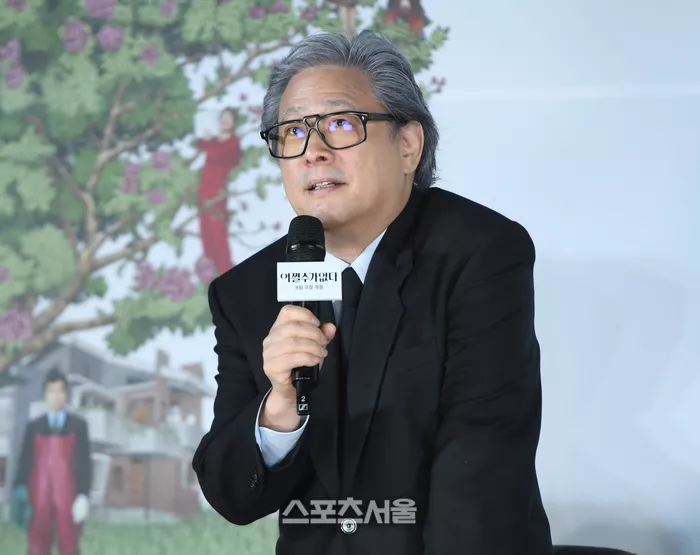
The latest buzz in the cinematic world surrounds Park Chan-wook’s new masterpiece, ‘It Can’t Be Helped,’ and its absence from the final Oscar International Feature shortlist. While some observers have called it a ‘snub,’ a closer look at its unique visual language and narrative concept reveals a more nuanced story, perhaps even a pre-ordained artistic divergence.
The Essence of Park Chan-wook’s Vision
A cool reception from the public even before the Academy weighed in suggests a fundamental conceptual disconnect. Park Chan-wook‘s signature aesthetic, while undeniably polished, has been perceived to lack the raw, pulsating beat of contemporary life.
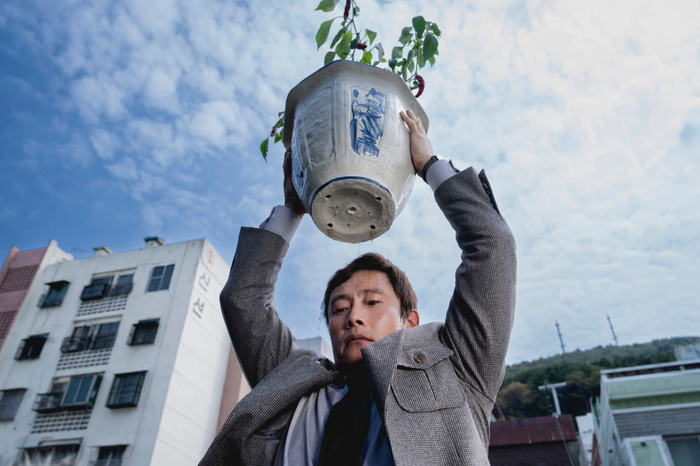
- 🎨 ‘It Can’t Be Helped’ (2025) artfully portrays the anxieties of the middle class, depicting a patriarch making extreme choices for family and career.
- ✨ Its visual perfection is breathtaking, yet it struggles to bridge the gap with a broader audience.
A Tale of Two Cinematic Worlds
Contrast this with Bong Joon-ho’s ‘Parasite’ (2019), a film that swept Cannes and the Oscars. Its world reeked of the grimy, earthy scent of a semi-basement apartment, an odor that pierced the global consciousness. In stark contrast, Park Chan-wook’s cinematic universe is a meticulously crafted ‘artificial garden.’
- 🌸 Every detail in Park Chan-wook‘s films is flawlessly controlled: wallpaper without a single flaw, perfectly tailored suits, and formal dialogue rarely heard in daily life.
- 🚫 This world, while beautiful and refined, feels suffocating. Behind its smooth, glass-like façade, there’s no space for the struggles of everyday life – the worry of rent, the pangs of unemployment.
Echoes of an ‘Artist’s Doll Play’?
What might have been celebrated as pure aesthetics in the 2000s now, in 2026 where survival is paramount, can appear as little more than a ‘well-fed artist’s doll play.’ Audiences today seek the rough embrace of relatable reality over hollow beauty.
Philosophy and the Pulse of the Era
Park Chan-wook has consistently probed ethical dilemmas, posing questions like, ‘Is revenge redemption?’ (‘Oldboy’) or ‘Can infidelity be love?’ (‘Decision to Leave’). These deep queries are his artistic bedrock. Yet, the challenge isn’t the profundity of the questions, but the ground they stand on.
The elite anxieties explored in ‘It Can’t Be Helped’ risk seeming like ‘luxurious laments’ to a public grappling with tomorrow’s uncertainties. While these concerns hold their own weight, they don’t resonate with the universal human experience that captivates a broad audience.
When Art Becomes a Monologue
Audiences haven’t stopped engaging with profound thought; they simply desire narratives that connect with their own lives. While Bong Joon-ho brought philosophy down to earth by piercing the societal wound of class, Park Chan-wook, in his own majestic castle, continues a refined dialogue. When philosophy doesn’t meet its era, it ceases to be art and becomes a ‘monologue.’ The weariness some feel with Park Chan-wook‘s recent films isn’t because they are too complex, but because they feel too distant.
The Shifting Tides of Cinematic Appreciation
The Academy’s artistic inclinations are clear:
- 🤝 ‘Parasite’ explored class conflict.
- 👨👩👧👦 ‘Everything Everywhere All at Once’ celebrated immigrant families and diversity.
- 🌍 ‘Nomadland’ depicted nomadic lives amidst economic turmoil.
Each touched the most tender pulse points of their respective eras.

Neither Cannes nor the Oscars bestow their highest honors purely on ‘aestheticism’ devoid of a compelling narrative heart. The exclusion of Park Chan-wook’s visually opulent films, where the mise-en-scène shines brilliantly but often without overt social context, signifies the Academy’s yearning for stories that mirror our present moment. Is it possible that the artistic clock of Park Chan-wook, a maestro for so long, has paused in its own exquisite sphere? Unless he descends from his perfectly controlled world to the gritty, earthy streets of reality, both the Oscars and audiences may continue to seek their connection elsewhere.
While Park Chan-wook‘s visual artistry remains unparalleled, perhaps this moment invites a re-imagining of how deeply his exquisite narratives can embrace the raw, shared experiences of today. We yearn for his unique genius to intertwine with the heartbeats of our current world, creating new visual wonders that resonate with every soul.
Editor: Jayden Han 📸