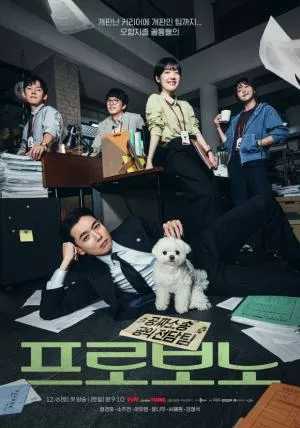
In an era where the pursuit of justice often feels like navigating a complex, proprietary system, the tvN drama Pro Bono recently concluded, leaving us with a stark, almost fantastical, reflection on Korea’s legal landscape. Far from a simple courtroom procedural, this series unpacks the intricate ‘legal tech’ that governs our society, revealing how the noble concept of ‘pro bono’ work can become entangled with corporate interests and the raw mechanics of power.
The term ‘pro bono,’ Latin for ‘for the public good,’ traditionally refers to legal services offered free of charge to those who cannot afford them. It’s a cornerstone of ethical legal practice. However, Pro Bono deftly pivots this idealistic premise, using the mandatory pro bono hours for Korean law firms as its dramatic canvas. The series explores a world where ‘public good’ can be a cleverly disguised facade for ‘private gain,’ exposing the systemic vulnerabilities within what should be an impartial framework.
At the helm of this compelling narrative is Moon Yu-seok (문유석), a former judge turned prolific writer. His previous acclaimed dramas, Miss Hammurabi and Devil Judge, similarly dove into the ethical quagmires of the judiciary. In Pro Bono, Moon Yu-seok leverages his insider perspective, offering a rare, unvarnished look at the legal industry’s operational complexities and its often-opaque ‘algorithms’ of power.
The drama strikingly illustrates how the definition of ‘public interest’ itself can be a contested domain. We witness law firms framing their mandatory pro bono contributions not as altruism, but as a strategic maneuver to:
- ⚖️ Divert public scrutiny from more lucrative, often morally ambiguous, corporate cases.
- 👨⚖️ Provide junior lawyers with ‘experience’ under senior guidance, sometimes from figures embodying the very ‘villains’ of the legal world.
- 📈 Utilize pro bono teams as a buffer, ensuring the firm’s main revenue-generating divisions remain unburdened.
This resonates with a previous legal drama, Esquire, which also depicted how large firms could treat pro bono as a checkbox exercise rather than a commitment to justice. The drama’s depiction of this internal conflict is jarringly real.

The series introduces us to terms like ‘법 기술’ (beop gisul, or ‘legal techniques’) and ‘법꾸라지’ (beop kkuraji, ‘legal eels’)—phrases that have recently permeated public discourse in Korea. These aren’t just legal terms; they represent a sophisticated, almost technological, manipulation of the law, where loopholes are exploited with surgical precision. The show’s protagonist, the brilliant ex-judge turned lawyer Kang David (played by Jung Kyung-ho), often finds himself fighting fire with fire, employing his own dazzling ‘legal tech’ to combat the entrenched systems of injustice. However, even his prowess can’t always guarantee a truly just outcome, exposing a bitter truth: legal outcomes are often less about moral absolutes and more about strategic maneuvering. We see the influence of:
- 🏛️ “Jeon-gwan-ye-u” (전관예우), preferential treatment for former officials, subtly swaying verdicts.
- 🗣️ Media manipulation and public opinion campaigns influencing judicial decisions.
- 🤝 Behind-the-scenes lobbying by powerful entities affecting the very core of justice.
The final episodes daringly suggest a world where judges themselves might be manipulated, or even orchestrate cases, for the benefit of specific factions, hinting at a deeply unsettling ‘backdoor’ in the legal system.
At the pinnacle of this intricate web is Oh Gyu-jang (played by veteran actor Kim Kap-soo), the revered founder of the drama’s fictional mega-firm. He’s referred to as ‘Doctor’ rather than ‘lawyer,’ a testament to his profound influence across all strata of Korean society. Oh Gyu-jang embodies the ultimate ‘systems architect’—not of justice, but of power. His firm employs a formidable array of former chief judges, prosecutors general, and influential columnists, mirroring the real-world ‘old boy networks’ that often dictate legal outcomes. When confronted by Kang David about whether he’s a lawyer or a lobbyist, Oh Gyu-jang chillingly responds, ‘A coordinator. Someone has to get their hands dirty behind the scenes, for those on stage.’ This line encapsulates the show’s core argument: the powerful don’t just win cases; they orchestrate the entire legal ecosystem.

As an industry observer, Pro Bono forces us to consider the ‘source code’ of our legal systems. It’s a powerful reminder that true innovation in justice isn’t just about faster processes, but about ensuring the underlying ‘algorithms’ genuinely serve equality over entrenched power structures.
Ultimately, Pro Bono asks a profound question: Can legal frameworks truly uphold justice for all, or are they merely sophisticated tools that serve the powerful? The drama concludes with an open ending, offering a glimmer of hope, yet the lingering impression is one of a ‘fantasy’—a dream of a world where justice is blind and equal protection under the law is a universal reality, not a hard-won battle for the few. For many, the constitutional right to ‘pursue happiness’ remains an elusive goal, tangled in the very ‘legal tech’ meant to protect it.
Editor: Alex Kim 💻